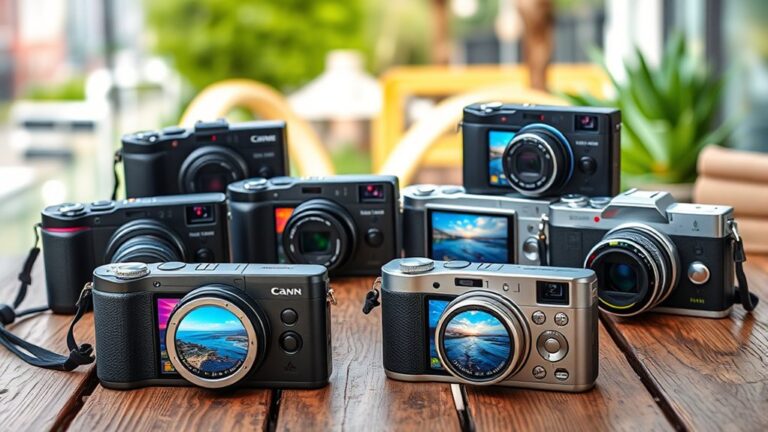
Are you ready to take your photography to the next level? Canon DSLR cameras have been trusted by millions of photographers for decades. These powerful tools combine cutting edge technology with user friendly designs. Whether you are just starting your photography journey or looking to upgrade your gear, this complete review will help you make the right choice.
Canon continues to offer some of the best DSLR cameras on the market with excellent image quality, reliable performance, and amazing value. Let me walk you through everything you need to know about Canon DSLR cameras and help you find the perfect match for your creative vision.

Key Takeaways
Canon DSLR cameras offer exceptional value for photographers at all skill levels with proven technology that delivers professional results every time you press the shutter button.
The sensor technology in Canon DSLRs provides outstanding image quality with excellent low light performance, high resolution capabilities, and impressive dynamic range that captures every detail.
Dual Pixel autofocus systems make Canon DSLRs stand out from competitors with lightning fast focusing speeds and smooth continuous autofocus that works perfectly for both photos and videos.
Build quality and ergonomics set Canon apart with weather sealed bodies, comfortable grips, and intuitive controls that make shooting enjoyable even during long sessions.
Video recording capabilities have evolved significantly with many Canon DSLRs now offering 4K recording, making them versatile tools for content creators and videographers.
The extensive EF lens ecosystem gives you access to hundreds of high quality lenses ranging from affordable kit lenses to professional grade glass that will grow with your skills.
Understanding Canon DSLR Technology
Canon DSLR cameras use a mirror mechanism that reflects light from the lens up into an optical viewfinder. This traditional design gives you a real time view of your scene without any electronic lag. The DSLR stands for Digital Single Lens Reflex. When you press the shutter button, the mirror flips up and the sensor captures the image. This technology has been refined over decades to deliver reliability and performance.
The beauty of DSLR technology lies in its simplicity and effectiveness. You see exactly what the lens sees through the optical viewfinder. This direct connection helps you compose shots more naturally. The battery life is exceptional because the optical viewfinder uses very little power compared to electronic viewfinders. Many Canon DSLRs can capture thousands of shots on a single charge.
Canon has continued to invest in DSLR development even as mirrorless cameras gain popularity. The company understands that many photographers prefer the proven performance and robust build quality of DSLRs. These cameras work flawlessly in challenging conditions where electronic systems might struggle. The optical viewfinder never lags or drains your battery, giving you confidence in critical shooting situations.
Canon EOS Rebel T7: Perfect Entry Point for Beginners

- 24.1 Megapixel CMOS (APS-C) sensor with is 100–6400 (H: 12800)
- Built-in Wi-Fi and NFC technology
- 9-Point AF system and AI Servo AF
Last update on 2026-04-26 / Affiliate links / Images from Amazon Product Advertising API.
The Canon EOS Rebel T7 serves as the perfect introduction to serious photography. This camera packs a 24.1 megapixel CMOS sensor that delivers stunning image quality. The DIGIC 4+ image processor ensures fast performance and excellent color reproduction. Built in Wi-Fi connectivity lets you share photos instantly with your smartphone or tablet.
Beginners love the Rebel T7 because it offers guided shooting modes that teach you photography basics. The camera explains settings in simple language and helps you understand how aperture, shutter speed, and ISO work together. The full HD video recording capability makes it great for vloggers and content creators. You get professional looking results without needing years of experience.
The kit lens that comes with the Rebel T7 covers versatile focal lengths from wide angle to portrait. This 18-55mm lens handles most everyday situations beautifully. The camera body feels solid and comfortable in your hands. Controls are clearly labeled and easy to reach. The 9 point autofocus system locks onto subjects quickly and accurately. Battery life exceeds 500 shots per charge, perfect for day long shooting sessions.
Image Quality and Sensor Performance
Canon sensors are legendary for producing beautiful colors and smooth tonal gradations. The CMOS sensors used in Canon DSLRs capture light with impressive efficiency. You get clean images even in challenging lighting conditions. The resolution ranges from 18 megapixels in entry level models to over 30 megapixels in advanced bodies. Higher megapixel counts give you more flexibility for cropping and printing large.
The sensor size makes a huge difference in image quality. Canon offers both APS-C crop sensor cameras and full frame sensors. APS-C sensors are found in Rebel and mid range models. They provide excellent quality while keeping camera size and cost down. Full frame sensors in models like the 5D Mark IV and 6D Mark II deliver exceptional dynamic range and low light performance.
ISO performance has improved dramatically in recent Canon DSLR generations. Modern models shoot clean images at ISO 6400 and beyond. The noise reduction algorithms preserve detail while controlling grain. You can confidently shoot indoor events, night scenes, and other low light situations. The 14 bit color depth captures subtle color variations that make your photos look more lifelike and three dimensional.
Autofocus Systems That Never Miss
Canon pioneered Dual Pixel CMOS autofocus technology that revolutionized DSLR focusing. This system uses phase detection pixels across the entire sensor surface. The result is incredibly fast and accurate focusing in both photo and video modes. Subject tracking follows moving subjects smoothly without hunting or hesitation.
The number of autofocus points varies by model. Entry level cameras typically feature 9 to 45 autofocus points. Professional models offer 61 or even 65 points covering most of the frame. More autofocus points give you greater flexibility in composition. You can place your subject anywhere in the frame and still achieve sharp focus.
Face detection and eye autofocus work brilliantly in newer Canon DSLRs. The camera automatically finds faces in the scene and prioritizes them for focus. Eye detection ensures portrait subjects have tack sharp eyes every time. These intelligent autofocus modes make capturing great people photos effortless. The continuous autofocus during video recording is smooth and professional looking, making Canon DSLRs popular with videographers.
Video Recording Capabilities
Canon DSLRs transformed the video production industry when they first offered HD video recording. The large sensors create that cinematic shallow depth of field look that viewers love. Modern Canon DSLRs record 4K video with excellent detail and dynamic range. The Dual Pixel autofocus keeps subjects sharp throughout your clips.
Frame rate options give you creative flexibility. Most models shoot full HD at 60 frames per second for smooth slow motion. The 4K recording typically runs at 30 frames per second. Manual exposure control during video recording lets you achieve professional results. You can adjust aperture, shutter speed, and ISO just like when shooting stills.
Audio quality matters just as much as video quality. Canon DSLRs include built in microphones and external microphone inputs. The microphone jack accepts professional audio equipment for broadcast quality sound. Headphone jacks let you monitor audio levels in real time. Time lapse and interval timer functions are built in for creative video projects. The combination of superb image quality and professional features makes Canon DSLRs excellent video tools.
Build Quality and Weather Sealing
Canon constructs DSLR bodies from durable materials designed to withstand years of heavy use. Entry level models use high quality polycarbonate that resists impacts while keeping weight down. Mid range and professional bodies feature magnesium alloy construction that provides exceptional rigidity and protection.
Weather sealing protects your investment in challenging conditions. Seals around buttons, dials, and ports keep moisture and dust out. The lens mount is sealed to prevent contaminants from reaching the sensor. Professional Canon DSLRs like the 5D Mark IV can handle rain, snow, and dusty environments. You can shoot confidently in conditions that would damage lesser cameras.
The shutter mechanism is rated for hundreds of thousands of actuations. Entry level shutters typically last 100,000 cycles. Professional shutters exceed 150,000 cycles before needing replacement. The mirror mechanism operates smoothly and quietly. Build quality extends to the LCD screen with scratch resistant coatings. Canon DSLRs feel solid and professional in your hands, inspiring confidence in any shooting situation.
Top 3 Alternatives for Canon DSLR Camera

- Class leading image quality, ISO range, image processing and metering equivalent to the award winning D500
- Large 3.2” 922K dot, tilting LCD screen with touch functionality
- 51 point AF system with 15 cross type sensors and group area AF paired with up to 8 fps continuous shooting...

Last update on 2026-07-02 / Affiliate links / Images from Amazon Product Advertising API.

- High image quality with 32.5 Megapixel CMOS (APS-C) sensor
- High-speed continuous shooting of up to 10 fps with no time Lag during ovf shooting
- 4K UHD 30P/ Full HD 120P video
Last update on 2026-04-27 / Affiliate links / Images from Amazon Product Advertising API.

- Improved Dual Pixel CMOS AF and eye detection AF 24.1 Megapixel CMOS (APS-C) sensor with is 100–6400 (H...
- Built-in Wi-Fi and NFC technology working temperature range: 32-104°F/0-40°C
- 9-Point AF system and AI Servo AF
Last update on 2026-04-26 / Affiliate links / Images from Amazon Product Advertising API.
Canon EOS 90D: The Ultimate Enthusiast Camera
The Canon EOS 90D represents the pinnacle of APS-C DSLR technology. This camera packs an impressive 32.5 megapixel sensor that captures stunning detail. The resolution rivals many full frame cameras while maintaining the reach advantage of the crop sensor. Wildlife and sports photographers love the extra magnification that APS-C provides.
Continuous shooting speed reaches 10 frames per second through the optical viewfinder. This rapid fire capability ensures you never miss decisive moments. The buffer depth allows extended bursts before the camera slows down. The 45 point all cross type autofocus system tracks subjects with remarkable accuracy. Focus tracking works reliably even with erratically moving subjects.
The 4K video recording in the 90D delivers professional quality footage. The Dual Pixel autofocus during video is smooth and responsive. You get full sensor readout without cropping in 4K mode. The vari angle touchscreen makes shooting from unusual angles easy. Battery life exceeds 1300 shots per charge, perfect for all day shooting. The 90D offers flagship performance in a compact body that handles beautifully.
Full Frame Excellence: Canon EOS 5D Mark IV
Full frame sensors deliver image quality that APS-C simply cannot match. The Canon EOS 5D Mark IV features a 30.4 megapixel full frame CMOS sensor. This sensor produces files with incredible detail and dynamic range. The larger pixels gather more light, resulting in cleaner high ISO performance.
The 61 point autofocus system with 41 cross type points covers the frame comprehensively. Focus tracking is among the best in the DSLR world. The EOS iTR autofocus system recognizes faces and colors to prioritize important subjects. You get sharp focus even in challenging lighting with moving subjects.
The 5D Mark IV shoots 4K video with exceptional quality. The large sensor creates beautiful background blur that makes subjects pop. Dual Pixel Raw technology captures slightly different versions of each image. You can fine tune focus and reduce ghosting during post processing. The weather sealed magnesium alloy body stands up to professional use. This camera has been the choice of wedding photographers, photojournalists, and commercial shooters for good reason.
Lens Compatibility and EF Mount Ecosystem
The Canon EF lens mount has existed since 1987 with hundreds of lenses available. This extensive selection gives you unlimited creative possibilities. You can find lenses ranging from ultra wide fisheyes to super telephoto primes. The EF mount works on both full frame and APS-C Canon DSLRs.
EF-S lenses are designed specifically for APS-C sensor cameras. These lenses are smaller and lighter while maintaining excellent optical quality. The image circle only covers the crop sensor, making them incompatible with full frame bodies. EF lenses work on any Canon DSLR, giving you more flexibility if you upgrade to full frame later.
Third party lens manufacturers like Sigma, Tamron, and Tokina produce excellent EF mount lenses. These options often provide outstanding value compared to Canon branded glass. The used lens market is huge with reliable options at every price point. Adapters allow you to use vintage manual focus lenses. The mature EF ecosystem ensures you will always find the perfect lens for any photographic challenge.
Low Light Performance and ISO Range
Canon DSLRs excel when the lights go down. The native ISO range typically starts at 100 and extends to 25,600 or higher. Expanded ISO modes push sensitivity even further for extreme situations. The noise handling algorithms preserve detail while controlling grain effectively.
Full frame sensors show their advantage in low light situations. The larger pixels gather more photons, creating cleaner images at high ISO values. You can shoot handheld in dim restaurants, churches, and theaters. The autofocus systems work reliably down to very low light levels. Some professional Canon DSLRs focus in near darkness.
The in camera noise reduction can be adjusted to suit your preferences. Aggressive noise reduction creates smoother images but softens fine details. Light noise reduction preserves more texture. Many photographers shoot raw files and handle noise reduction during editing. The high ISO capability opens up creative possibilities that were impossible with film cameras. You gain freedom to shoot in natural light without flash.
Battery Life and Power Management
DSLR battery life crushes mirrorless cameras thanks to the optical viewfinder. Canon DSLRs easily achieve 600 to 1000 shots per charge in normal use. Professional models exceed 1500 shots. This exceptional endurance means you spend less time changing batteries and more time shooting.
The LP-E6 battery family powers many Canon DSLRs. These batteries charge quickly and hold power for months when not in use. Battery grips accept two batteries for double the capacity. The grips also provide better balance with large lenses and vertical shooting controls.
Power saving features help maximize battery life. The camera automatically sleeps after a period of inactivity. You can adjust the sleep timer to match your shooting style. Battery percentage indicators keep you informed about remaining power. USB charging is available on newer models, letting you charge from power banks. The reliable battery performance means you never miss shots due to dead batteries.
Ergonomics and User Interface
Canon designs DSLR bodies with photographer comfort in mind. The grip contours naturally to your hand for secure holding. Controls fall easily under your fingers without looking. The layout has remained consistent across generations, making upgrades feel familiar. Customizable buttons let you tailor the camera to your workflow.
The mode dial provides quick access to shooting modes. The top LCD displays key settings at a glance. The rear LCD screen shows detailed information and menu access. Touchscreen functionality in newer models speeds up menu navigation. The optical viewfinder provides a bright clear view with 100 percent frame coverage on advanced models.
Button placement prioritizes frequently used functions. Exposure compensation, ISO, and white balance get dedicated controls. The quick menu system accesses common settings without diving into menus. The intuitive interface helps you work quickly without fumbling through options. New users appreciate the logical organization while experienced shooters enjoy the efficient workflow.
Connectivity and File Sharing Options
Built in Wi-Fi has become standard on most Canon DSLRs. You can connect your camera to smartphones and tablets wirelessly. The Canon Camera Connect app provides remote control and instant file transfer. You can review shots on a larger screen and share them immediately to social media.
Bluetooth low energy connectivity maintains a constant link between camera and phone. GPS location data from your phone automatically embeds in your images. Remote shooting via smartphone works great for group photos and self portraits. You can adjust exposure settings and trigger the shutter from the app.
USB connectivity allows tethered shooting to computers. Photographers in studios use tethered capture to view images instantly on large monitors. HDMI output lets you connect the camera to external monitors and recorders. Eye-Fi card support and FTP transfer capability exist on professional models. The extensive connectivity options integrate Canon DSLRs seamlessly into modern workflows.
Memory Cards and Storage Solutions
Canon DSLRs typically use SD cards, CF cards, or both. Entry level and mid range models feature SD card slots. Professional bodies often include dual card slots for backup and overflow. CF cards in pro cameras offer faster write speeds for burst shooting. The new CFexpress format appears in the latest flagship models.
SD card speed ratings matter for continuous shooting and 4K video. UHS-I or UHS-II cards provide sufficient performance for most situations. Look for cards rated V30 or higher for 4K recording. Card capacity has increased dramatically with 256GB and 512GB cards now affordable.
Dual card slots provide crucial backup for professional work. You can record the same images to both cards simultaneously. Alternatively, use one card for RAW files and another for JPEGs. The flexible recording options protect against card failure. Some photographers use one card for stills and another for video. Large capacity cards reduce the need to swap cards during important shoots.
Canon DSLR vs Mirrorless Cameras
The DSLR versus mirrorless debate continues as Canon develops both technologies. DSLRs offer unmatched battery life thanks to optical viewfinders. The lens selection for EF mount DSLRs remains unrivaled. Used DSLR bodies and lenses provide excellent value compared to newer mirrorless options.
Mirrorless cameras offer advantages in size, weight, and electronic viewfinder features. They typically focus faster in low light and provide better video autofocus. The mirrorless RF mount represents Canon’s future direction. However, DSLRs will remain supported for years with continued firmware updates and service.
Many photographers choose DSLRs for their proven reliability and familiar handling. The optical viewfinder never lags even in the coldest weather or brightest sunlight. Professional DSLRs like the 5D Mark IV and 1DX series deliver dependable performance in critical situations. The choice ultimately depends on your shooting style and priorities.
Maintenance and Care Tips
Proper maintenance keeps your Canon DSLR performing like new for years. Clean the exterior with a soft microfiber cloth. Never use harsh chemicals that could damage coatings. Remove dust from the lens mount area with a soft brush. Keep the camera in a padded bag when not in use.
Sensor cleaning is the most critical maintenance task. Dust spots on the sensor appear in every image. Use the camera’s built in sensor cleaning function regularly. Stubborn spots require manual cleaning with sensor swabs and fluid. Many photographers have sensors professionally cleaned annually.
Firmware updates improve camera performance and add features. Check Canon’s website periodically for updates. Follow the instructions carefully when updating firmware. Battery contacts should be cleaned occasionally with a dry cloth. Store batteries at partial charge for long term storage. Regular maintenance ensures your Canon DSLR operates reliably for many years.
Price Points and Value Proposition
Canon DSLRs span a wide price range to fit any budget. Entry level Rebel models start around $500 with kit lens. Mid range models like the 90D cost approximately $1200 for the body. Full frame cameras range from $1300 for the 6D Mark II to $2500 for the 5D Mark IV.
The used market offers incredible value for budget conscious buyers. A used Rebel T6 or T7 provides excellent image quality at bargain prices. Previous generation cameras like the 80D remain capable performers. You can build a complete kit with body and multiple lenses for the price of a new mirrorless camera.
The longevity of Canon DSLRs contributes to their value proposition. These cameras remain useful for many years without becoming obsolete. The extensive lens ecosystem means your investment grows over time. Compared to constantly upgrading smartphones, a quality DSLR provides lasting value and superior image quality. Professional models hold their value well and can be used commercially for years.
Making the Right Choice for Your Needs
Choosing the perfect Canon DSLR depends on your photography goals and budget. Beginners should start with a Rebel series camera to learn fundamentals. The affordable price and excellent image quality make them risk free purchases. Kit lenses provide versatility while you discover your preferred subjects.
Enthusiasts ready to advance should consider the 90D or 6D Mark II. These cameras offer professional features without flagship prices. The improved autofocus, higher resolution, and better build quality justify the investment. You gain room to grow without immediately needing to upgrade.
Professional photographers need the reliability and performance of the 5D Mark IV or 1DX series. The weather sealing, dual card slots, and extensive customization support demanding workflows. These cameras earn their keep through paid work. Consider your shooting style, budget, and future plans when making your choice.
Frequently Asked Questions
What is the best Canon DSLR for beginners?
The Canon EOS Rebel T7 stands as the best choice for beginners who want excellent image quality and easy operation. This camera offers intuitive controls with guided shooting modes that teach you photography basics. The 24.1 megapixel sensor captures beautiful images while the built in Wi-Fi makes sharing simple. The affordable price includes a versatile kit lens that handles most situations. You get professional features without overwhelming complexity.
How long do Canon DSLR cameras last?
Canon DSLR cameras last for many years with proper care and maintenance. The shutter mechanism is rated for 100,000 to 150,000 actuations depending on the model. Most photographers never reach this limit during normal use. The electronic components remain functional for decades. Many professional photographers still use Canon DSLRs from 10 years ago. Regular cleaning and careful handling extend camera lifespan indefinitely. Canon provides service and support for discontinued models for years after production ends.
Can Canon DSLRs shoot 4K video?
Yes, many Canon DSLR cameras shoot 4K video with excellent quality. The EOS 90D, 5D Mark IV, and newer models include 4K recording capability. The 4K footage uses the full sensor width without cropping. Dual Pixel autofocus works beautifully during video recording. Frame rates typically reach 30 frames per second in 4K mode. Full HD video can be recorded at up to 60 frames per second. The large sensors create cinematic depth of field that viewers love.
What makes Canon Dual Pixel autofocus special?
Canon Dual Pixel CMOS autofocus uses phase detection pixels across the entire sensor surface. Each pixel contains two photodiodes that detect phase differences for focusing. This technology provides fast accurate autofocus during both photo and video shooting. The continuous autofocus during video is smooth and professional looking. Subject tracking follows moving subjects without hunting or hesitation. Face detection and eye autofocus work reliably. Dual Pixel autofocus revolutionized DSLR focusing and remains a Canon exclusive advantage.
Should I buy a Canon DSLR or wait for mirrorless?
Canon DSLRs remain excellent purchases offering proven performance and outstanding value. The optical viewfinder provides lag free viewing with exceptional battery life. The massive EF lens selection gives you unlimited creative options. Used DSLR bodies and lenses provide incredible value compared to new mirrorless systems. Canon will support DSLR cameras for many years with firmware updates and service. Buy a DSLR if you value reliability, battery life, and a mature lens ecosystem. Mirrorless makes sense if you prioritize the latest features and smallest size.
How important is megapixel count in Canon DSLRs?
Megapixel count matters but image quality depends on many factors beyond resolution. Entry level 24 megapixel sensors provide plenty of detail for prints up to 16×20 inches. Higher megapixel counts like 30 or 32 megapixels give more cropping flexibility and larger print sizes. However, lens quality, sensor technology, and image processing affect results just as much. A 24 megapixel camera with excellent lenses produces better images than a 30 megapixel camera with poor glass. Consider your actual printing and cropping needs rather than chasing maximum megapixels.