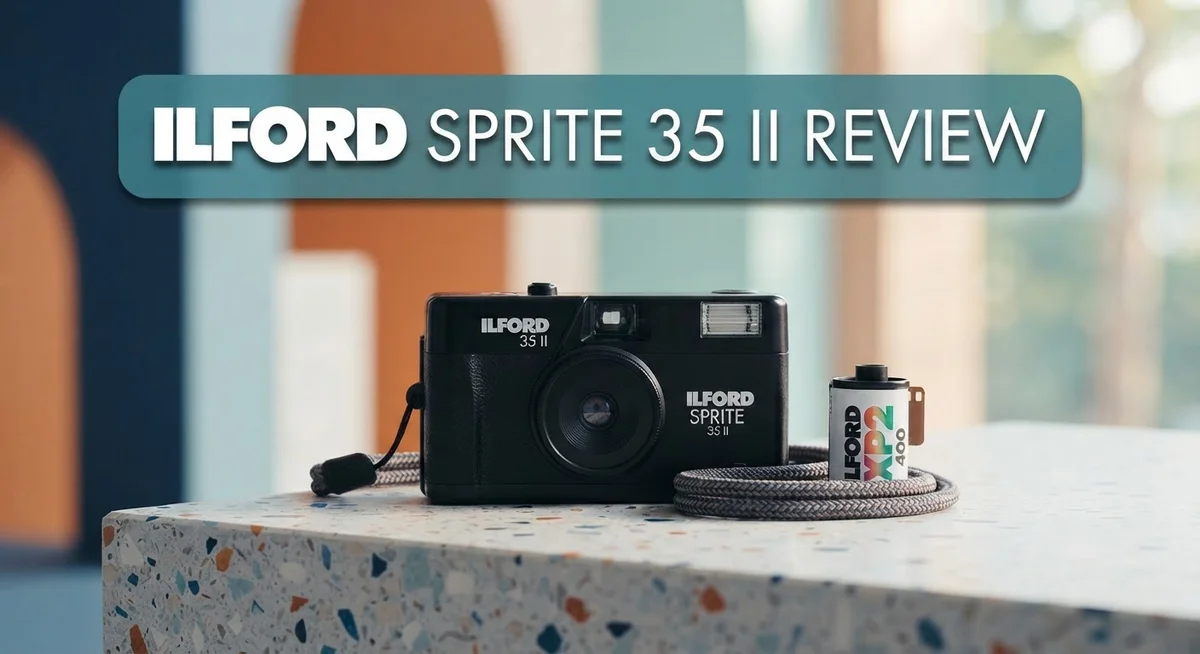
Are you ready to jump into film photography without a steep learning curve? The Ilford Sprite 35 II might be your perfect match.
This little camera weighs just 122g. You can slip it into any pocket or bag with ease.
It runs on one simple rule: point and shoot. There are no dials to adjust or settings to fuss over.
The fixed-focus lens and built-in flash handle everything for you. This makes it a great pick for beginners who want real film results fast.
Film lovers praise its warm, nostalgic look. Every shot feels like a memory from another decade.
In this review, we will explore what makes this camera tick. We will also cover where it falls short.
By the end, you will know if this reusable film camera fits your creative journey.
In a Nutshell
Here is the quick rundown of the Ilford Sprite 35 II. Check these points before you decide.
-
Simple operation: This camera uses one button. You just point and shoot. No settings to adjust or worry about.
-
Fixed shutter speed: It shoots at 1/120s every time. This keeps things consistent for beginners.
-
Basic lens setup: The 31mm lens stays fixed focus at f/9. You get decent shots in bright light.
-
Manual film handling: You wind and rewind the film yourself. This adds a fun, retro touch to the experience.
-
Mixed reliability record: Some users report frame counter issues. Quality control varies between units.
-
Creative limits exist: You cannot adjust exposure or focus manually. This camera suits casual shooters more than pros.
-
Solid starter choice: It competes with cameras like the Kodak Ektar H35. Both offer easy entry into film photography.
This camera works best for beginners who want simple film shooting. It is not built for creative control or technical precision.
Optical Design and Lens Quality
The optical design of the Ilford Sprite 35 II keeps things simple and straightforward. You get a single-element 31mm lens that handles all your focusing needs without any manual adjustment required.
This fixed-focus approach means the lens stays set at a predetermined distance. The f/9 aperture works as a constant throughout every shot you take. The result is a camera that removes guesswork from the equation. You point, you shoot, and the lens delivers consistent results.
The single-element design is the key to understanding this camera’s character. Fewer glass elements mean simpler light paths through the lens. This design choice contributes to the warm, nostalgic image aesthetic that film enthusiasts love about the Sprite 35 II. You will notice softer edges and a gentle quality to your photographs. Colors lean toward warmer tones rather than clinical sharpness.
The 31mm focal length sits between standard and wide-angle territory. This length captures enough scene width without extreme distortion. For casual snapshots and everyday moments, this focal length feels natural and forgiving.
The fixed-focus system works well for subjects between roughly 3 feet and infinity. Everything in that range stays acceptably sharp. You lose the ability to focus on very close objects or create intentional blur effects. This limitation matters less for beginners who simply want clear, usable photos.
The lens quality reflects the camera’s entry-level positioning. Don’t expect razor-sharp detail or professional-grade optics. Instead, expect reliable performance that captures the moment without technical fuss. The optical design prioritizes simplicity over precision.
One important note: the lens does not feature autofocus. The fixed-focus system is entirely passive and mechanical. No batteries power the focusing system. This passive approach adds to the camera’s reliability and simplicity.
The 1/120s shutter speed pairs with the f/9 aperture to create a specific exposure window. This combination works well in bright daylight and overcast conditions. Indoor shots rely heavily on the built-in flash to provide adequate light.
Overall, the optical design serves its purpose effectively. You get a lens that works, a focal length that feels useful, and an aesthetic that appeals to film photographers seeking character over clinical perfection.

- Camera Type: Ilford Sprite 35-II Camera meets the needs of people experimenting with 35mm film and looking for...
- Lens: The camera has a fixed shutter speed (1/120s) with a 31mm, single element f/9 fixed-focus wide-angle...
- Built-In Flash: It also features a built-in flash with a 15-second recycle time for night time shooting
Last update on 2026-08-29 / Affiliate links / Images from Amazon Product Advertising API.
Build Quality and Durability
The Ilford Sprite 35 II feels solid in your hand despite its featherweight design. The camera body uses plastic construction, which keeps the overall package light and portable. This material choice works well for a camera meant to slip into a pocket or bag without effort.
The build quality shows practical durability for casual shooting. The camera survived drops and bumps in real-world use by multiple users. The plastic housing absorbs minor impacts better than you might expect. The manual wind and rewind mechanism operates smoothly without grinding or resistance.
However, durability concerns do exist with this model. Frame counter failures appear frequently in user reports across photography forums. Some cameras lose count after just a few rolls of film. The mechanical counter mechanism seems prone to jamming or skipping. This issue doesn’t affect image capture, but it creates frustration when tracking your film progress.
The shutter mechanism holds up well during extended use. The fixed 1/120s speed means fewer moving parts to wear out. Fewer components generally equals fewer things that can break. The built-in flash triggers reliably, though the 15 second recycle time tests your patience between shots.
Water resistance is minimal on this camera. The plastic seams and manual film door leave room for moisture to seep inside. You should avoid shooting in heavy rain or near water. The camera handles light drizzle without immediate problems, but prolonged exposure risks internal damage.
The lens barrel maintains its focus position without drift. The fixed f/9 aperture and 31mm focal length stay locked in place. You won’t experience focus creep or aperture changes over time. The optical surfaces resist scratching reasonably well, though the lens cap deserves regular use.
Overall, the Sprite 35 II balances lightweight portability with adequate durability for beginner film photographers. The plastic construction feels intentional rather than cheap. Quality control inconsistencies in the frame counter remain the primary durability weakness. For casual shooting and travel, this camera performs reliably enough to justify its place in your camera bag.
Ease of Use and Operation
The Ilford Sprite 35 II strips away complexity. You get a camera that demands almost nothing from you, which is exactly the point.
Operating this camera feels refreshingly straightforward. The single-button design means you point, press, and shoot. There’s no menu diving or setting confusion. Even someone picking up a film camera for the first time will feel comfortable within seconds.
Loading film is manual but intuitive. You open the back, insert your 35mm cartridge, and wind the film leader onto the take up spool. The process takes maybe two minutes. Rewinding happens the same way—you use the manual crank when you finish your roll. This hands on approach actually helps you stay connected to the shooting process.
The fixed shutter speed of 1/120s and f/9 aperture remove decision making entirely. You don’t worry about whether your settings work. They always do, within reason. The 31mm fixed focus lens handles subjects from roughly 3 feet out to infinity without adjustment. This means every shot stays sharp in the intended range.
The built in flash activates automatically in low light and recycles in about 15 seconds. You don’t toggle settings or adjust power. It simply fires when needed. This automation lets you focus on composition instead of technical details.
What you sacrifice is creative control. You cannot manually adjust exposure, change focus points, or override the flash. The camera makes these decisions for you. Some photographers find this limiting. Others appreciate the simplicity.
The frame counter tracks your shots, though some users report this mechanism fails occasionally. Wind the film gently to avoid forcing the mechanism.
Weight matters here. At just 122g, this camera slips into a jacket pocket without complaint. You’ll actually carry it everywhere, which means more opportunities to shoot.
The overall experience prioritizes accessibility over flexibility. This camera asks nothing of you except to compose your shot and press the button. That singular focus makes it excellent for beginners exploring film photography.
Top 3 Alternatives
Fujifilm Instax Mini

- Compact and cute design. Easily twist the lens to turn on and off
- Built-in selfie mirror for easy selfies Close-up mode with parallax correction
- Features automatic exposure and flash control for bright photos that are not “washed-out”
Last update on 2026-04-26 / Affiliate links / Images from Amazon Product Advertising API.
The Fujifilm Instax Mini offers instant film photography in a compact design. You get photos printed within minutes of taking them. The camera features a simple autofocus system and automatic flash. It’s perfect for parties and events where you want physical prints immediately.
The lens quality produces sharp images in good lighting. Colors appear vibrant and natural on the film. You can adjust exposure manually if needed. The camera accepts AA batteries, making it easy to find replacements.
Kodak FunSaver

- Bundle Includes: 2 x Kodak Fun Saver Single Use Camera
- Ideal For: If you're looking for a fun, easy way to take great pictures, indoors or out, the Kodak Fun Saver...
- Brighter, Vibrant Colors: Loaded with Kodak 800 speed, 27 exposure film for pictures with bright, vibrant...
Last update on 2026-04-26 / Affiliate links / Images from Amazon Product Advertising API.
Kodak FunSaver provides film photography with straightforward operation. This camera works well for casual shooting and everyday moments. The fixed-focus lens handles most situations adequately.
You’ll need to send film to a lab for development. This means waiting days or weeks for results. The camera uses simple controls with minimal settings. It’s lightweight and fits easily in bags or pockets.
Olympus Mju II

- Olympus Stylus MJU-II is a 35mm point-and-shoot film camera released by Olympus in 1997.
- It has a compact and sleek design, making it easy to carry around and use on the go.
- The camera features a 35mm f/2.8 lens with autofocus and a built-in flash, as well as other useful features...
Last update on 2026-08-29 / Affiliate links / Images from Amazon Product Advertising API.
The Olympus Mju II stands out as a premium film camera. This model delivers exceptional image quality with its advanced autofocus and zoom lens. The camera features weather-resistant construction for durability.
The Mju II includes exposure compensation and program modes for creative control. The lens produces sharp details across the frame. Film development happens at labs, giving you time to anticipate results.
Each option serves different photography styles. Instant cameras give immediate gratification. Traditional film cameras offer better image quality but require lab processing. Choose based on your preference for instant prints versus developed negatives and prints.
Image Quality and Aesthetic
The Ilford Sprite 35 II produces images with a distinctly warm and nostalgic character. This aesthetic comes naturally from the camera’s simple optical design and fixed exposure settings. You get soft, slightly diffused tones that feel vintage even when shot on modern film stock.
The 31mm fixed-focus lens captures a wider perspective than standard 50mm lenses. This means more of your scene stays in frame. Subjects from roughly 3 feet away through distant backgrounds all render acceptably sharp. The single-element lens design contributes to the camera’s signature look—colors appear slightly muted and highlights glow softly.
Color rendition depends heavily on your film choice. Shooting Fujifilm or Kodak color stock brings out warm yellows and reds. Black and white film emphasizes the lens’s gentle contrast. The fixed f/9 aperture and 1/120s shutter speed work together to create consistent, predictable exposures in daylight. Indoor shots rely on the automatic flash, which produces that classic on-camera flash look.
The built-in flash fires automatically in dim conditions. It recycles in about 15 seconds between shots. This creates even lighting but limited depth. You cannot dial the flash down or turn it off manually. The result feels authentic to point-and-shoot photography from the 1990s.
Image sharpness remains acceptable across the frame. Edge softness appears minimal for a camera at this price point. The lack of autofocus never feels limiting because the fixed focus zone covers most everyday situations. Grain structure appears natural and pleasing, especially in shadows.
One important consideration: quality control varies between individual cameras. Some users report excellent image consistency. Others experience slight vignetting or uneven sharpness. This inconsistency reflects the camera’s entry-level manufacturing standards.
The aesthetic appeal of the Sprite 35 II lies in its simplicity. You get genuine film photography without overthinking exposure or focus. Images carry a casual, documentary feel. For photographers seeking warm, unpretentious results, this camera delivers exactly that character. The visual output matches the camera’s straightforward design philosophy.
Flash Performance and Limitations
The built-in flash on the Ilford Sprite 35 II activates automatically when light levels drop. You don’t need to think about it. The camera decides when to fire, and the flash recycles in roughly 15 seconds between shots.
This automatic approach works well for casual snapshots in dim rooms or evening gatherings. The flash output is modest, so it covers subjects within about 8 to 10 feet effectively. Beyond that distance, exposure falls off noticeably.
The main limitation is lack of override control. You cannot disable the flash when you want available light photography. You cannot force it on during daylight for fill flash effects. The camera makes all flash decisions for you, which removes creative flexibility but also eliminates guesswork for beginners.
Flash performance varies depending on your film speed. Faster films like ISO 400 stock require less flash assistance, so the camera may not fire the flash as often. Slower films like ISO 100 trigger the flash more frequently in identical lighting conditions.
Another consideration involves battery life. The flash draws power from the camera’s battery, so frequent flash use depletes batteries faster than purely ambient light shooting. Users report getting 10 to 15 rolls of film per battery set under normal conditions.
The flash itself produces a cool color temperature. This sometimes creates a slight blue cast on skin tones compared to natural daylight. Warm films help counteract this effect, though results vary.
Red eye appears occasionally in close up portraits, particularly with faster film stocks. The flash sits close to the lens, which contributes to this issue. Stepping back from your subject or using a simple red eye reduction technique helps minimize the problem.
For serious flash photography or creative lighting control, the Sprite 35 II falls short. Its flash serves one purpose: basic illumination in low light. If you need manual flash control, external flash compatibility, or precise exposure metering, you’ll need a different camera. For snapshots and casual use, the automatic flash performs adequately and keeps operation simple.
Pros and Cons
Pros
- Weighs just 122g and fits easily in a pocket or small bag
- One button operation means anyone can pick it up and start shooting immediately
- Warm, nostalgic image character that feels vintage and appealing
- 31mm lens gives a wider perspective than standard 50mm cameras
- Built in flash handles low light situations without extra gear
Cons
- Fixed 1/120s shutter and f/9 aperture remove all creative control over exposure
- Frame counter mechanism fails on some units, making shot tracking unreliable
- Cannot disable the automatic flash when you want natural light photography
- Quality control varies between individual cameras, so results differ unit to unit
Who Should Buy It
This camera works best for specific types of photographers. If you shoot casual snapshots and don’t need creative control, the Sprite 35 II fits your needs perfectly.
Beginners love this camera because it removes all guesswork. You load film, point, and shoot. No aperture settings. No shutter speed choices. No exposure compensation. This simplicity means you focus on composition instead of camera mechanics.
Travel photographers appreciate how light and compact it is. At just 122g, it slips into any pocket or bag without adding weight. You can carry it everywhere without fatigue. The one button operation means you stay ready to capture moments without fumbling through menus.
Street photographers who want vintage aesthetics find real value here. The 31mm lens provides a wider field of view than standard cameras. The warm, nostalgic image character creates a distinctive look that feels authentic and retro. This aesthetic appeals to people who shoot for Instagram or personal projects.
Casual snapshot takers benefit from the automatic flash. You don’t need to carry external lighting gear. The flash activates when light drops, so you capture events indoors without extra equipment.
However, this camera is NOT for you if you want creative control. The fixed 1/120s shutter and f/9 aperture cannot change. You cannot override the automatic flash. You cannot adjust exposure for artistic effect. Manual film photographers will find these limitations frustrating.
Serious hobbyists should look elsewhere. The frame counter fails on some units, making shot tracking unreliable. Quality control varies between individual cameras. You might receive a camera that works perfectly, or one with issues. This inconsistency matters if you depend on reliable equipment.
Photography students learning exposure principles should consider manual cameras instead. The Sprite 35 II teaches you nothing about how shutter speed or aperture affects images. You learn composition and timing, but not technical photography fundamentals.
In summary, buy this camera if you want simplicity, portability, and a vintage aesthetic. Skip it if you want creative control, reliability guarantees, or technical learning opportunities.
Final Verdict
The Ilford Sprite 35 II delivers a simple film experience. It suits anyone who wants easy shooting without extra steps. This camera proves that film photography does not need to feel complicated.
Image quality stays consistent across shots. The fixed lens and shutter create a signature look. Each frame carries a warm tone that many people enjoy.
Compared to the Kodak Ektar H35, this camera offers a similar approach to point and shoot film cameras. Both models keep things easy for new film shooters.
The Ricoh GR1 series sits in a different category. Those cameras give more control and sharper optics. They also require more knowledge to use well.
Reliability remains a fair concern with this camera. Some units show frame counter issues over time. Buyers should test their camera early after purchase.
Quality control varies from unit to unit. This means two people can have different experiences with the same model. It helps to check for defects right away.
This camera works best as a fun secondary option. It pairs well with a main camera for relaxed shooting days. Many users keep it in their bag for spontaneous moments.
Film photography beginners often find this camera to be a gentle entry point. It teaches basic concepts without overwhelming details. This makes it a great learning tool before moving to manual gear.
The final verdict is simple. This camera does one thing well. It captures memories with minimal fuss and a nostalgic feel.
Anyone who wants a no fuss film camera will enjoy this option. It fits easily into daily life and travel plans. The Ilford Sprite 35 II earns its place as a solid choice for casual film lovers.
Overall, this camera rewards patience with charm. It does not try to be more than it is. That honesty makes it worth considering for the right kind of photographer.
Frequently Asked Questions
Does the Ilford Sprite 35 II work well for beginners?
Yes, absolutely. This camera removes all the guesswork from film photography. You load film, point, and shoot. The one-button operation means no menus or settings to learn.
New photographers love how simple it is. You focus on composition and framing instead of worrying about exposure or aperture. The automatic flash kicks in when needed, so low light situations don’t stop you.
Can you control the flash on this camera?
Unfortunately, no. The flash fires automatically in dim conditions, and you cannot disable it. This is a real limitation if you want natural light photography indoors.
Street photographers sometimes find this frustrating. You lose the ability to shoot moody, unlit scenes the way you want. If flash control matters to you, look at manual film cameras instead.
What image style does this camera produce?
The Sprite 35 II creates a warm, nostalgic look that feels vintage and appealing. The 31mm lens captures a wider perspective than standard cameras, giving your photos a distinctive character.
Colors feel soft and slightly muted. Blacks stay rich. The overall aesthetic works great for casual snapshots and travel photography. Many users love this character and choose the camera specifically for this reason.
How reliable is the Ilford Sprite 35 II?
This is where the camera has weak spots. Some units develop frame counter failures, making shot tracking unreliable. Quality control varies between individual cameras, so results differ from unit to unit.
You might get a perfectly functioning camera, or you might experience issues. This is a fair concern to keep in mind before purchasing.